

To stay dry and protected from the wind at night in the wilderness, bivvies and tents are essential. Makeshift shelters like lean-tos or improvised beds are not covered here.
Bivvy or Tent – Which is Better?
Several factors influence the choice of overnight shelter in the wild. This guide is designed to make that choice easier. We’ll cover general advice on selection, use, and care.
General Selection and Use
Consider these questions when choosing a shelter: How many people need accommodation? If you usually go solo, a bivvy may be sufficient. For two or more people, a two-person tent is recommended.
How much gear do you carry, and how much space remains once your equipment is stored? Are you packing in a backpack, bike panniers, a canoe/kayak, or a car? Road-trippers and paddlers need less concern for pack size compared to hikers carrying everything on their backs.
Bivvies save space and weight. Low-quality bivvies may trap condensation: your breath and sweat condense inside, creating water droplets. In multiple tests with Alpine Bivvies, a double Gore-Tex membrane significantly reduces condensation.
For solo or two-person trips, we often use Alpine Bivvies. In severe weather, tents offer advantages: a vestibule provides shelter during storms, and the tent fabric protects better against hail.
Comfort and Ventilation
Tents provide more interior space for better air circulation, reducing condensation inside. Models with vestibules or awnings offer extra storage, protecting gear from wind and rain.
When buying a tent, check that seams are sealed, the floor is reinforced, and waterproof ratings exceed 5000 mm (ideally 10,000 mm). Seams and zippers are the main weak points.
Tent Use and Care
- Falling trees: Always set up in tree-free areas. If in the forest, check nearby trees for stability.
- Guy lines: Always use them for extra support. Above 50 km/h wind, assess whether to take down the tent (max wind tolerance varies by model).
- Rain: Avoid water pooling on the tent, which can collapse the structure.
- Heat/fire: Keep away from open flames or sparks — tent material is flammable.
- Insect spray: Avoid using inside or on the tent, as it can damage waterproofing.
- Touching wet tent fabric: Avoid contact with wet outer material.
Condensation in Tents
Water inside doesn’t always mean leaks. Cold, humid conditions plus breath, sweat, or wet clothing can cause condensation. Ventilate proactively and store wet clothing outside the tent.
Removing Tent Pegs
Never pull pegs directly through the fabric or guy lines; this can tear the tent. Use a second peg to remove the first safely.
Material Care
Tents and bivvies are not permanent shelters. UV, insect sprays, and chemicals can damage fabrics. Clean with plain water, mild soap, or a very diluted Kaiser Natron solution.
Tent Storage
Store tents dry and clean in a cool, ventilated space. Dirt and moisture promote mold, indicated by bad odor or black spots. Set up the tent to air and clean if needed.
Tent Floor
The ideal floor is reinforced or layered. We recommend placing a tarp underneath to extend lifespan. Check the ground for sharp objects to avoid punctures.
Hammocks: Lightweight Comfort Above the Ground

Hammocks are an excellent alternative to tents and bivvies, especially in forested areas. They keep you off the cold, uneven ground, reduce the risk of moisture buildup, and offer surprisingly good sleep comfort when set up correctly. With a proper tarp, underquilt, and mosquito net, a hammock becomes a versatile shelter system that’s lightweight, compact, and ideal for long-distance hikers, bushcrafters, and anyone who wants a fast, clean camp setup.
Tarp Shelters: Simple, Modular, and Surprisingly Comfortable

A tarp is one of the most versatile shelter options you can carry. Set it up between trees or with trekking poles, and you instantly create a weatherproof roof for your sleeping system. Paired with an airmattress or folding camp bed and a good sleeping bag, a tarp setup offers excellent ventilation, low weight, and a very flexible footprint. It’s perfect for campers who value simplicity while still enjoying a comfortable night on the ground.
Winter Tarp Setup
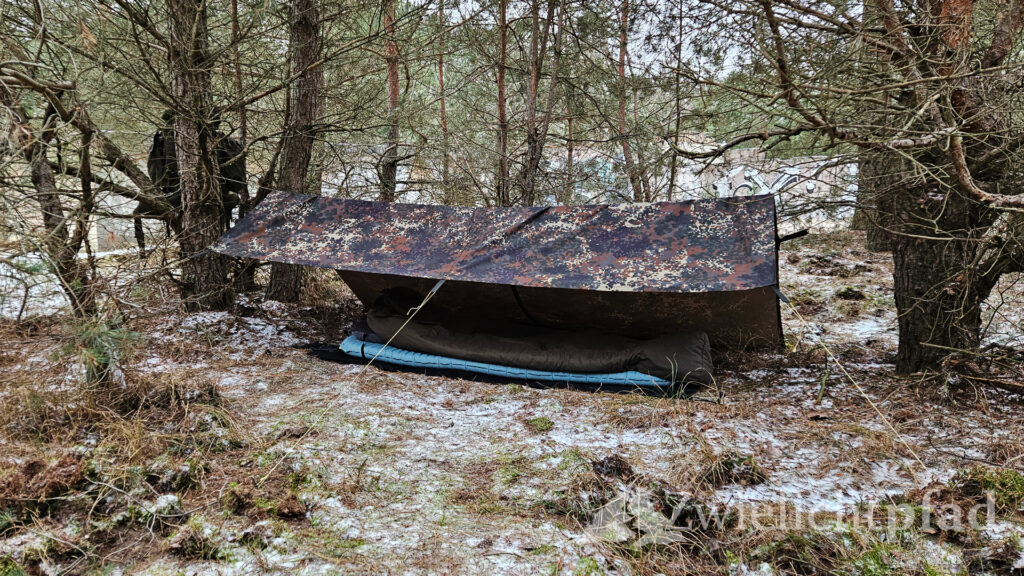
A tarp setup can work extremely well in winter if you adapt your gear and your expectations to the conditions. Compared to tents, a tarp offers excellent ventilation, which helps reduce condensation in freezing temperatures, and it allows very flexible pitching depending on wind direction, terrain, and snow conditions. With the right setup, a tarp remains a lightweight, versatile, and surprisingly effective shelter even in cold weather.
In winter, the real key is the sleeping system. A warm and reliable sleeping bag like the Carinthia Defense 6 provides the necessary insulation for sub-zero nights, while a well-insulated sleeping pad such as the Therm-a-Rest NeoAir is essential to prevent heat loss to the frozen ground. With proper ground insulation and a weatherproof pitch, a winter tarp setup can be both minimalistic and genuinely comfortable.
Get your own gear:
- Carinthia Defense 4 https://amzn.to/3Zk37XI
- Themr-a-Rest NeoAir https://amzn.to/45PtJUe
Affiliate Disclosure: Some links on this page may be Amazon affiliate links. If you purchase through them, I may earn a small commission at no extra cost to you. This helps support the channel and future explorations.