
Why your $80,000 pickup truck will leave you stranded in a crisis—and why a trekking bike is the ultimate gridlock-proof escape plan.

The Gridlock Trap: Why Motorized Evacuations Fail
In any major emergency or regional evacuation, highways become static parking lots within three hours. Countless two-ton metal boxes block every main exit route, leaving drivers trapped in fuel-depleted gridlock.
While pickup trucks, 4x4s, and electric SUVs look impressive on paper, they rely on three fragile assumptions:
- Open roads free of traffic congestion and debris.
- Active supply chains and powered gas stations.
- Intact infrastructure without collapsed bridges or road blockades.
When any of those three systems fail, motorized transport instantly becomes a heavy, immobilized metal box.
Why Two Wheels Beat Four in a Collapse
1. Total Mobility & Bypass Power
A bicycle isn’t restricted to paved roads. You can navigate narrow alleys, forest trails, gravel paths, or pedestrian bridges. If a fallen tree or concrete barrier blocks the path, you don’t turn back—you pick up the 15 kg frame and carry it across.
2. Caloric Fuel Supply
Gas pumps stop working during power blackouts, and fuel stations drain within hours. A bicycle runs on human calories. Storing high-calorie food (oats, peanut butter, trail mix) is infinitely easier, cheaper, and more portable than storing gallons of volatile fuel.
3. Acoustic & Thermal Stealth
In a critical situation, remaining undetected is safety. Running engines generate miles of acoustic noise and a massive thermal heat signature. A bicycle moves silently and can be hidden in dense brush within seconds.
4. 100% Field Repairability
Modern vehicles rely on complex sensors and electronic control units (ECUs). If an axle breaks or an ECU fails, you need a tow truck. With a bicycle, a single pocket multi-tool, a spare tube, and a quick-link allow you to fix almost any trail breakdown yourself.
The Bug Out Setup: Light, Mobile, Self-Sufficient
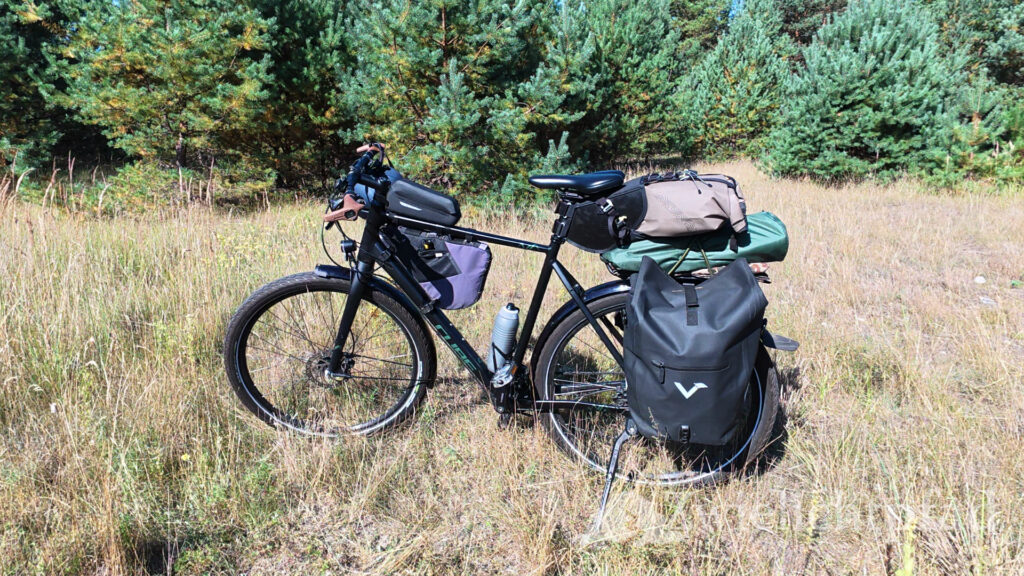
You don’t need a $5,000 custom rig to build a reliable evacuation bike. My setup is built around a standard 8-year-old trekking bike equipped with:
- Frame & Seat Packs: Keeping heavy gear centered and low for optimal handling off-road.
- Rear Panniers: Carrying essential shelter, water filtration, and food rations.
- Low-Maintenance Drivetrain: Mechanical disc brakes and simple gearing for field-repairability.
Explore The Gear Loadout
Want to see exactly what goes inside the bags for a complete off-grid bug out setup?

Do you have a tiered evacuation plan, or are you betting everything on your vehicle? Watch the full video above and leave your thoughts in the YouTube comment section!